
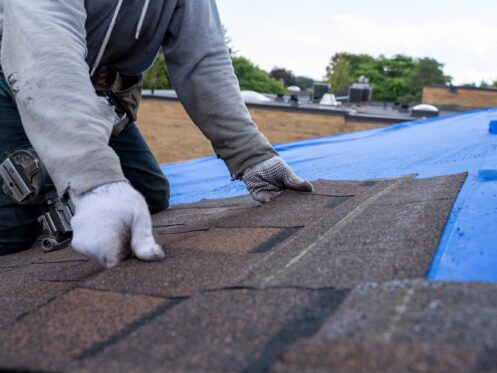
Many roofing contractors use the terms installation and replacement interchangeably, which can be confusing for homeowners. When comparing roof installation vs. roof replacement in Plano, TX, it’s important to understand that these services involve different situations, requirements, and costs. Roof installation involves new construction, while roof replacement focuses on replacing an existing roof. This guide explains the key differences in more detail to help you make an informed decision about your roofing project.
Looking for a roof estimate in Plano? Contact Initech Roofing now for a free consultation.
What Is Roof Installation?
Roof installation in Plano, TX refers to putting a brand-new roofing system on a structure that doesn’t already have one. This is typical for home additions, new home construction, detached garages, sheds, and projects that convert a flat roof to a pitched roof. Unlike a roof replacement in Plano, there are no existing roofing materials to remove. Instead, the entire roofing system is installed from the roof decking to the final roofing material.
What Is Roof Replacement?
Unlike roof installation, roof replacement involves removing and replacing an existing roofing system. The process begins with tearing off old roofing materials, followed by repairs to the decking and other structural elements. If the replacement involves upgrades like added skylights or dorms, the underlying structure will have to be changed to accommodate the new features.
After repairs are completed, new roofing materials are installed along with a review of ventilation to ensure long-term performance and energy efficiency. If you had isolated damage to your roofing system and it isn’t near the end of its lifespan, a professional roof repair in Plano may be enough to restore it without full replacement. Our roofers can help you evaluate whether target repairs are sufficient or if a full roof replacement makes more sense in the long term.
When You Need Each
Whether you are building a fresh structure and need a new roof vs a roof replacement depends on your situation and the condition of your existing roof. Roof installation is typically required for new construction projects, detached structures, and home additions. It may also be needed when a roof is in such poor condition, or has collapsed, that it needs to be rebuilt from scratch.
Roof replacement is generally recommended when your existing roof has reached the end of its lifespan or has widespread damage. Roof replacement is also generally needed if you have had multiple repairs within a short period of time, or your roof has undergone significant hail or wind damage.
How the Two Affect Cost and Timeline
The difference between roof installation and replacement shows in material costs and project timelines. Roof installation is typically much faster because there’s no existing roofing system to remove. This also eliminates the costs of tear-off and disposal. Roof replacement requires additional labor to remove the old roofing materials, thoroughly inspect your existing roof decking, and dispose of the debris. However, when comparing a new roof installation to a roof replacement, they’re typically similar in terms of permitting requirements, roof inspections, and building code considerations.
Insurance Considerations
Insurers may offer “new roof” discounts for homeowner’s insurance coverage if you have your entire roof replaced. There may be further savings for more durable, storm-resistant materials that are less likely to require storm damage roof repair. Roof replacements may partially or fully be covered by insurance if the roof has sustained qualifying damage. Coverage typically includes costs associated with events like wind, hail, and severe storms.
Insurance carriers often use different terminology when describing coverage, so it’s important to review your policy documents and declaration page carefully. In most cases, insurance companies will cover storm damage roof repair. However, it can be helpful to get insurance claims help from your roofer, who can document the damage and provide an estimate for the adjuster.
In situations involving severe weather, homeowners may require immediate emergency roof repair in Plano. This typically involves tarping to prevent additional water intrusion and structural damage while insurance claims are being processed.
Code Updates That Affect Both
One thing to keep in mind is that both roof installation and roof replacement in Plano, TX, must comply with current local building codes and regulations. Many of these requirements include updated ventilation standards, wind uplift ratings, and safety performance metrics. These code requirements can also affect related exterior features such as gutter installation. Working with a qualified roofing company in Plano, TX is one of the best ways to ensure your roof meets code standards.
Choosing a Plano Roofing Contractor
From emergency roof repair in Plano to gutter installation, we do it all. As a fully licensed and manufacturer-certified roofing company, we offer strong local references, insurance experience, a workmanship warranty, and written estimates. Every reputable roofer should offer these.
In addition to residential roofing projects, our team also provides commercial roofing Plano services for local businesses and commercial property owners.
Contact Initech Roofing today to schedule a roofing consultation with one of our experienced professionals.

FAQs
Whether it’s the difference between roof installation and replacement or the best roofing materials, we get many questions. Below are answers to some of the most common.
The cost difference between roof installation and roof replacement really depends on the scope of your project. However, installing a roof on a newly constructed home will generally be cheaper than removing and replacing an aging roof. Getting a professional estimate for the work is a good idea in either situation.
For roof installation or roof replacement in Plano, TX, you will need a permit. Permitting requirements depend on local building codes and the extent of the work being performed. Our roofing contractor can help you determine what kind of permit is needed for your roofing project.
The lifespan of your new roof really depends on the materials it’s made of, its installation quality, weather conditions, and how often you maintain it. In general, asphalt roofs last 20 to 30 years, while metal and tile roofs have much longer lifespans. Regular inspections and timely repairs are the best ways to maximize the life of your new roof installation in Plano, TX.
Architectural asphalt shingles are one of the most popular roofing choices for a roof replacement in Plano. Many homeowners prefer these because they provide an attractive appearance, offer strong performance, and high durability. They are also available in a wide range of styles and colors, so you can get the perfect option to complement your home’s aesthetics.
The best option depends on the age of your roof, its overall condition, and the extent of the damage. In some cases, localized repairs may be sufficient for minor damage. However, if your roof has widespread damage or is nearing the end of its life, a full roof replacement in Plano can be the better option.